
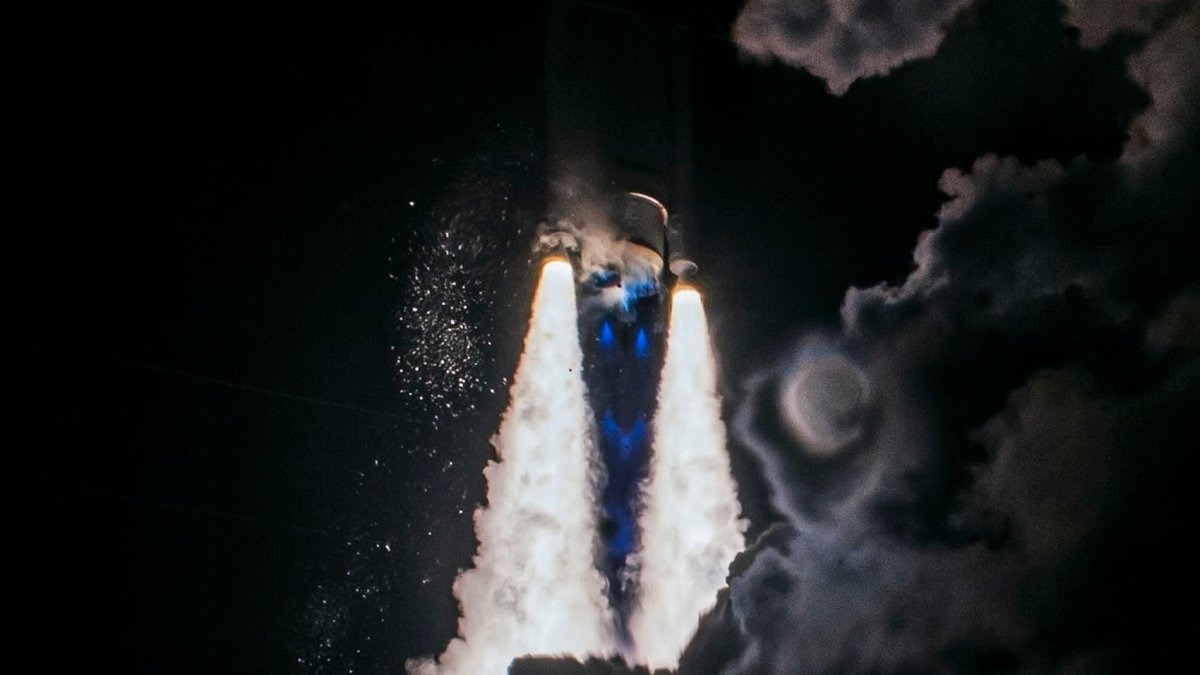

On the early Morning of January 8, 2024, at 1:18 AM CST, the Vulcan Centaur, United Launch Alliance’s newest rocket, took to the skies in a magnificent demonstration of its capabilities for its certification flight. Viewers were greeted with beautiful blue plumes from the rocket’s engines propelling Astrobotic’s and Celestis’ payloads. In this article, we will look at what exactly made this rocket special, what the payloads were, and what the future holds for this next generation launch vehicle.

Vulcan
The Vulcan rocket has had quite a storied development cycle leading up to its first launch. It is a heavy-lift capable launch vehicle developed by United Launch Alliance (ULA) in partnership with Blue Origin (and on a subsidiary note, Boeing and Lockheed Martin, the alliance of United Launch Alliance). Development on the launch vehicle started due to an expanding market in larger vehicle providers for more massive payloads. Some examples of other rockets in this category include Falcon Heavy (SpaceX), Ariane 5 (Arianespace), and Long March 5 (CALT). As pressure grew for ULA to develop a similar type of vehicle, work started in 2014 to build a rocket similar to the ones mentioned prior to expand the company’s ability to provide a ride to orbit and beyond. The partnership with Blue Origin was to provide engines for the rocket, as the previous workhorse of ULA, Atlas V, used aging and foreign RD-180 engines. As concerns for national security grew with the times, ULA looked to an “in house” partnership with a United States based company to provide engines, which lead to the company selecting Blue Origin and their advanced BE-4 engine to be flown on the first stage (2 BE-4s would fly on the first stage). These engines were unique in that they were methalox engines, burning methane and liquid oxygen, rather than the hydrolox (hydrogen and liquid oxygen) engines present on the Delta IV or kerolox (RP-1 and liquid oxygen) found on the Atlas V. The upper stage, Centaur, is powered by 2 RL-10’s, developed by Aerojet Rocketdyne (recently acquired by L3Harris). These are also aging engines, utilizing a hydrolox system. ULA was targeting a 2019/2020 launch; however, the BE-4 experienced many problems, delaying the usage of the engine until this year. In addition to the BE-4s, the rocket also utilized 2 Solid Rocket Boosters (SRBs) to provide additional lift for the rocket. After nearly a decade of development, setbacks, and testing, ULA and Blue Origin finally had their rocket ready for a certification flight. The two major payloads that were on the Vulcan Centaur were the Celestis’ Voyager Service 1 “Enterprise Flight” and the Peregrine Mission One lunar lander.

Celestis
Celestis is a unique memorial service company, dedicated to flying cremated remains into a variety of space-based locations. One can either send themselves once they pass, or send a loved one with Celestis, making it an intriguing way to honor someone with a passion and interest in space. There were some concerns raised about flying remains to places such as the lunar soil, as some cultures do view it as a desecration to a holy body or spiritual location. The Navajo Nation raised such concerns. These concerns were brought up to the government, who stated that the aerospace companies are private entities, therefore the government does not have much oversight over the commercial payloads these companies launch. However, NASA did acknowledge the concerns, saying that any payloads that were launched through governmental means would be mindful of the contents of those payloads. As this was very close to the launch window of Vulcan, there was no action regarding this launch, but concerns are still being voiced to find some sort of regulation to protect or limit the exposure of cremated remains on religious and holy areas in space.

Astrobotic
Astrobotic is an aerospace company based in Pittsburgh, Pennsylvania with a focus on lunar logistics. They offer rovers, satellites, and navigation systems with the express goal of providing for the growing market of lunar-based operations. In addition to the more traditional aerospace ventures, they also have been developing more ground-based telecommunication and energy solutions for prolonged stay on the moon. They have acquired Masten Space Systems recently within the last year, further building up their talent pool. They have won many contracts from NASA for these various lunar-based services and are hoping to acquire rides from rocket companies to propel their payloads into space. For this specific mission, they had planned to land on the moon, deploying commercial and research payloads as part of the NASA Commercial Lunar Payload Services (NASA CLPS) and some remains from Celestis that were designated to go to the moon rather than into deep space.

Launch
The launch went effortlessly. In the early morning (at least in the United States), the rocket roared to life and as planned launched the payloads into orbit. The shining feature of the launch was by far the rocket engines, the BE-4s. Methane, when burned close to proper stoichiometric levels, burns a beautiful blueish purple, and we have seen this with SpaceX’s Raptor Engines. But the blue that was present on the BE-4 engines was electric. I have attached an image of the rocket containing the absolutely stunning blue exhaust, a perfectly apt color considering the manufacturer as well. The Celestis launch was also very smooth from the second stage for the “Enterprise Flight”. However, the Astrobotic payload had experienced some issues with a potential propellent leak causing it to not be able to complete its mission to the lunar surface, much to the dismay of its partners, and especially those who had their loved ones’ remains on track to land on the moon. Based on orbital calculations, it was found to re-enter the atmosphere on Thursday, January 18th, burning up due to no protective shield from the harsh conditions and speed.

Final Remarks
Despite this rather somber end to one of the payloads of the mission, the overall mission regarding Vulcan went extremely smoothly. Both ULA and Blue Origin were able to superbly demonstrate their combined capabilities and provide the United States, as well as the world, with a powerful, yet efficient rocket. It is now up to the ever-growing commercial space industry to take advantage of such a machine to continue pushing us closer to the stars. As for Astrobotic, setbacks are inevitable in spaceflight. These operations are extremely difficult, and Astrobotic was attempting to accomplish a lot. It is unfortunate that this would happen, but I have complete faith that the engineers and scientists at Astrobotic will bounce right back up and try again. This new chapter of spaceflight looks exciting, and I cannot wait to see what it entails.

Leave a Reply