
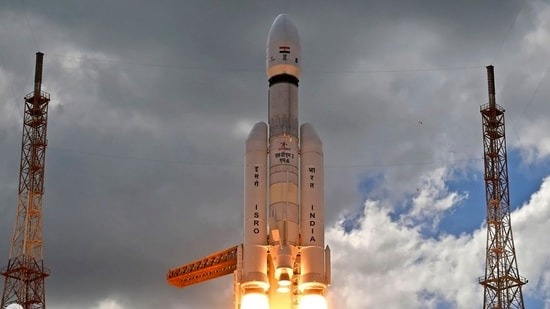

On July 14th, 2023, the Chandrayaan-3 successfully launched from Satish Dhawan Space Centre, located in Sriharikota, Andhra Pradesh, India. This marks India’s third mission to the moon through its Chandrayaan mission program, aimed at studying the chemical composition of the lunar surface, the evolution of the atmosphere remnants, and the presence of water-ice in the lunar regolith. In this article, we will take a look at the agency behind the launch, the Indian Space Research Organization (ISRO), the vehicle that propelled Chandrayaan-3, and the actual mission vehicle itself.

What is ISRO?
ISRO is the national space agency of India. It was founded on August 15th, 1969, as a direct successor to the Indian National Committee for Space Research (INCOSPAR) envisioned by Dr. Vikram Sarabhai. A rather modest aerospace agency, ISRO got it start building rockets using technology from neighboring nations, along with some domestic machines to begin their journey to space. They were frequently known to shuttle machinery and parts on the backs of horses, wagons, and other forms of transportation. With the help of the Soviets, ISRO was able to launch their first satellite, Aryabhata (named after the Indian astronomer) into orbit. After another launch aided by the USSR, ISRO drafted plans to create a new rocket made in India, the Satellite Launch Vehicle, or SLV. This was completely made from solid rocket fuel in all stages and had 4 launches to its name before being retired. After retirement, ISRO’s Liquid Propulsion Systems Centre (LPSC) began work on the Vikas engine (a shortening of the name VIKram A Sarabhai), based on the Viking engine from France, heralded by Nambi Narayanan. This, in turn, led to the development of the Polar Satellite Launch Vehicle (PSLV), which became a very reliable rocket for ISRO and made them one of the premier low-cost carriers to Low Earth Orbit (LEO). While the primary workhorse for ISRO was launching, work began on the GSLV, or Geosynchronous Satellite Launch Vehicle. This had a rougher time being developed, as there was some push-back in getting the upper stage engines made by the USSR from the US. However, the vehicle was able to be finished and both the PSLV and GSLV made up the backbone that was ISRO’s launches. For the Chandrayaan-3 mission, the GSLV Mk-3 used was renamed as the LVM3 or Launch Vehicle Mark 3. Among the various accolades and achievements from the vehicles and the numerous space missions, one that stands out is being the first and only nation to have reached Mars on their maiden spaceflight, a testament to the hard work from everyone at ISRO. They also previously held the largest deployment of satellites at 104 before SpaceX did so with their Transporter 1 mission at 143.

What is Chandrayaan-3?
Chandrayaan-3 is the third attempt at a lunar mission by ISRO. What makes this mission unique from the other two is that there is no orbiter. It will relay communications with the Chandrayaan-2 orbiter. Chandrayaan-1 had the orbiter and the Moon Impact Probe (MIP), and Chandrayaan-2 had both and Orbiter and Rover. Both suffered some technical issues, with the most sever being with the Chandrayaan-2 lander, which was not able to successfully land on the moon and continue that leg of the mission. Chandrayaan-1 also was proposed to have a life of 2 years, but just short of one year, was experiencing problems and had ceased communications. As mentioned before, the biggest mission objectives that the rover has been planned for are observing and experimenting on the lunar surface to examine the lunar regolith. This is so that we can have an increased knowledge base of the composition of various parts of “moon dust” to understand how water may be trapped in it and how we could potentially excavate it out for use. The rover is propulsively landed using four throttleable engines, with the electronics and navigation systems for maneuvering above the lunar surface made stronger and more redundant as a result of the Chandrayaan-2 failure.

The Launch
The launch itself went relatively smoothly. There were no main points of concern. As of this article, the rover’s orbit has been lifted a second time to get it operating at a more eccentric shape. This allows for Chandrayaan-3 to mainly utilize gravity to slingshot its way to the moon, instead of just making a straight beeline for it, causing an unnecessary loss of propellant that could be used for any midflight maneuvers. The mission control of ISRO has been noticed by many to have a certain, very expressive man who calls out the various stages of the launch. This man is the Range Ops Director at the spaceport, Ganesan Grahadurai. After every stage of the rocket launch, he makes sure the entire room (and those of us watching) know that the stage has gone well, with his declaration of “NORMAL”. While other rocket agencies and companies may just have a person call it out, ISRO’s unique take on this specific job makes it a rather heartwarming one to know that there is a man that the community loves just because he exclaims the status of the rocket at all important times.

Closing Remarks
The Chandrayaan-3 mission was an absolutely wonderous one to watch. Although it happened relatively early in the morning here in North America due to the location of the rocket, it was quite the rocket to watch. The way that it just rips off the launch pad is something that is very special and is recommended to witness at least once. From humble beginnings to where it is now, ISRO has kept the charm of spaceflight alive in India, and the entire community wishes it well to continue to the moon and successfully land.

Leave a Reply