
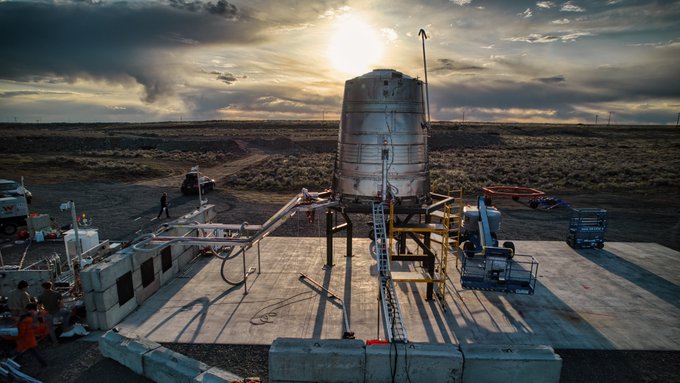

Stoke Space recently announced on Twitter their plans to move ahead with their Hopper SN2 prototype, after SN1 had “given [them] lots of learning.” The new prototype is currently slated to fly by the end of the summer.
Stoke’s own Starhopper
It is not inappropriate to draw similarities from Stoke’s testing methodology focusing on hoppers, to SpaceX’s Starship hop campaigns back from 2019 to 2021. Stoke Co-Founder Andy Lapsa had mentioned SpaceX and their achievements with great praise during his interview with Tim Dodd in February of this year. Taking inspiration, Stoke is following in SpaceX’s footsteps by setting up a rapid test campaign with no hesitation to fail.

Credit: Stoke Space
Like SpaceX’s Starship, Stoke’s second stage is intended to be reused by propulsively landing back on Earth after deorbiting. What makes Stoke’s vehicle unique is that it sports an integrated, actively cooled heatshield on the underside of the second stage.

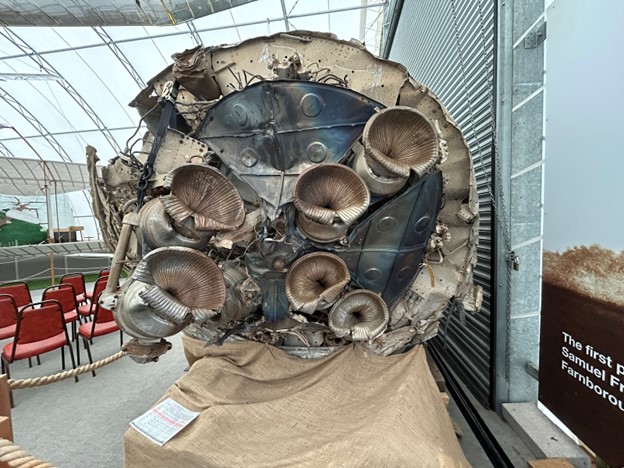
Credit: Stoke Space / Erik Kuna
As seen above, the engine is split into thirty (yes, thirty) thrust chambers around the perimeter of the rocket, with the heatshield slung underneath, allowing the heatshield to act as a normal capsule heatshield without any unnecessary intricacies. The feed system of the engine sits directly behind the heat shield. Now, for a regular ablative heatshield, this setup would make reentry a quite harrowing endeavor, as one speck of heatshield ablating too much exposes the internals of the engine and the rest of the second stage to hot plasma, which would not end well. Instead, this setup is actually the genius behind an actively-cooled heatshield.
With the feed system already right behind the heatshield, the propellant can run just underneath the skin of the heatshield, keeping it cool during reentry, while also minimizing the design complexity of the engine, as it will run through that pathway for both firing the engine and cooling the heatshield.
Hopper SN1’s Test Timeline
Stoke’s campaign has largely been fruitful so far, as they have already static fired their engine system for their second stage multiple times, including with the heatshield integrated onto the system.
As well as engine testing, Stoke had constructed and tested their first flight prototype of their second stage, Hopper SN1. Acting as their own Starhopper, SN1 was a pathfinder for production, logistics, and testing. On March 18th, Stoke completed a full wet dress rehearsal (WDR) with SN1, a first for the company.
On April 25th, Stoke completed a second WDR and was making preparations to mate the engine with the tank section and begin a static fire campaign. That was the last news shared by Stoke from SN1 until June 9th, when they announced the move to SN2.
What Happened to SN1?
While it is unconfirmed why the move to the next prototype is happening, there is of course always speculation to take the official word’s place. Stoke did convey that the reasoning for the move was due to the issues that were uncovered, whatever those may be. While it would be little surprise to learn the first prototype had design flaws, it is unknown how those were discovered. It is possible that they attempted a third WDR or a WDR with the engine mated, which had gone wrong and resulted in a damaged or destroyed vehicle. On the less exciting hand, a design flaw may have been simply uncovered during inspections that caused Stoke to not risk further testing as the chance was high enough that a loss of vehicle could occur, especially explosively.
SN2’s current status is unknown, however it is safe to assume all work being done on it has been accelerated to top priority for stoke. Especially to hit the end of summer hop date, we will likely see Hopper SN2 make its first appearance on Stoke’s social medias very soon.


Leave a Reply