
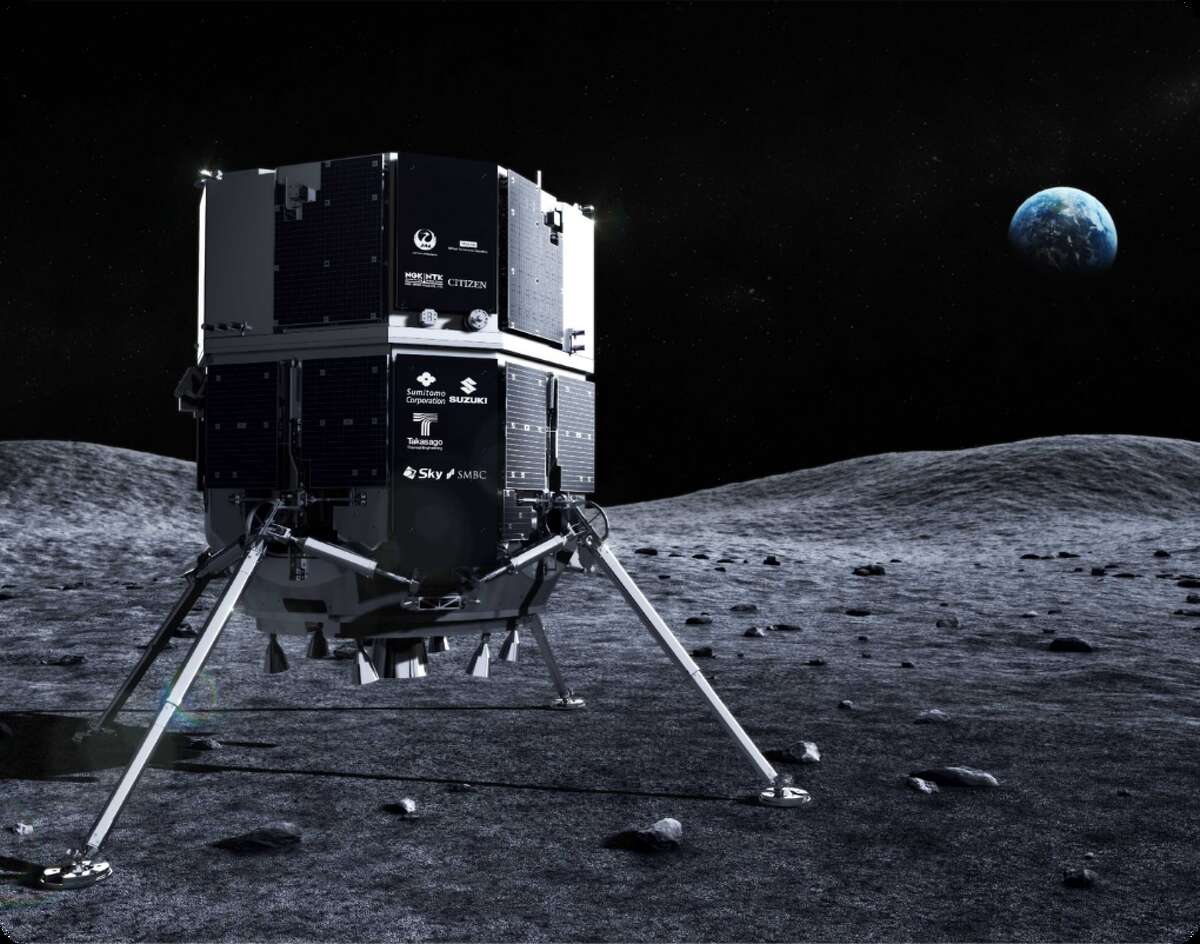

Japanese private company ispace’s HAKUTO-R Mission 1 lander has seemingly failed to successfully perform a soft landing on the lunar surface. Signal was lost during the final seconds of touchdown, and has yet to be recovered. As of this time, teams are still working to reestablish connection with the lander. If indeed unsuccessful, this will mark another fallen soldier in the quest for the first private lunar landing.
M1 is not the first private craft to attempt a landing on the Moon. The most notable previous attempt was Israel’s Beresheet lander in 2019, which itself failed during initial descent and impacted the Moon. The only crafts that have achieved a lunar landing were operated by NASA, China, or Russia.

Credit: NASA/SpaceX
On December 11, 2022, SpaceX’s Falcon 9 lifted off from SLC-40 at Cape Canaveral Space Force Station in Florida. Aboard were NASA’s Lunar Flashlight and ispace’s HAKUTO-R Mission 1 lunar lander. After a few months of maneuvers to fine tune its trajectory towards the Moon, M1 finally began its approach to the lunar surface in April.

Credit: ispace
As a technology demonstration mission, M1 had a series of milestones to achieve first before even considering landing. It had to demonstrate autonomous maneuvers and control of its orbit both on the way to the Moon and in lunar orbit. M1 successfully performed these tasks with no issues, and so moved on to attempting a soft touchdown on the lunar surface. ispace selected April 25 as the target date for final descent and landing of M1, which carries with it a number of small rovers and scientific equipment.
M1 is both a tech demo and an operational lander, carrying customer payloads on its first flight. Included are UAE’s “Rashid” lunar rover, and JAXA’s transformable lunar robot.

Credit: ispace
Descent and Surface Operations

Credit: ispace
The selected landing site for HAKUTO-R M1 was Atlas Crater, on the northeastern quadrant of the moon. This site was selected as it “meets technical specifications of the lander technology demonstration mission”, and all mission requirements for the mission’s customer payloads.
In the early hours of April 25th, M1 completed its “deorbit insertion” burn, and began its landing operation towards Atlas crater. It went through an occultation period where it went behind the dark side of the moon, but reappeared before making final descent.

Credit: ispace
The landing was streamed on ispace’s Youtube page. In it, they discussed many things surrounding both M1 and ispace, as well as covering the events that unfolded. At 12:40 PM EST, the simulation and initial telemetry showed a nominal descent and touchdown, however contact with the rover was lost at about 10 seconds before landing. For several minutes, the teams waited for a signal. Unfortunately, that signal has yet to come.
About 2 hours after landing, ispace announced their failed connection to the lander; they have not confirmed that the mission is lost, but it is increasingly unlikely that connection will be restored. It is possible that the craft will reconnect with the mission control center at any time.
It is assumed at this time that the landing may failed in its final moments, or that the landing was successful but caused an irreversible communications blackout. The team received data from descent all the way until the final seconds, making the attempt still a valuable success for ispace, even if the landing was proven unsuccessful.
Future Missions
Mission 2 (M2) is currently planned for 2024 and will carry a micro rover. Mission 3 (M3) will be a much more ambitious mission. It will use an upgraded “Series 2” spacecraft, and will also carry NASA’s “Eclipse” payload under the Artemis Program’s commercial payload service. M3 will carry both orbital and lunar surface payloads.
To reiterate, the mission has yet to be confirmed as unsuccessful, and a fortunate development may occur in that M1 reconnects with Earth and proves its success. As time goes on without signal, however, this appears less and less likely to be the case. Although their first attempt have eventually be proven unsuccessful, ispace is committed to trying again with its future missions. HAKUTO-R M1 was the closest to successful attempt of any private company to date. This mission is still a great success for ispace, especially for a first attempt. True to their motto, ispace will “Never quit the lunar quest.”

Leave a Reply