
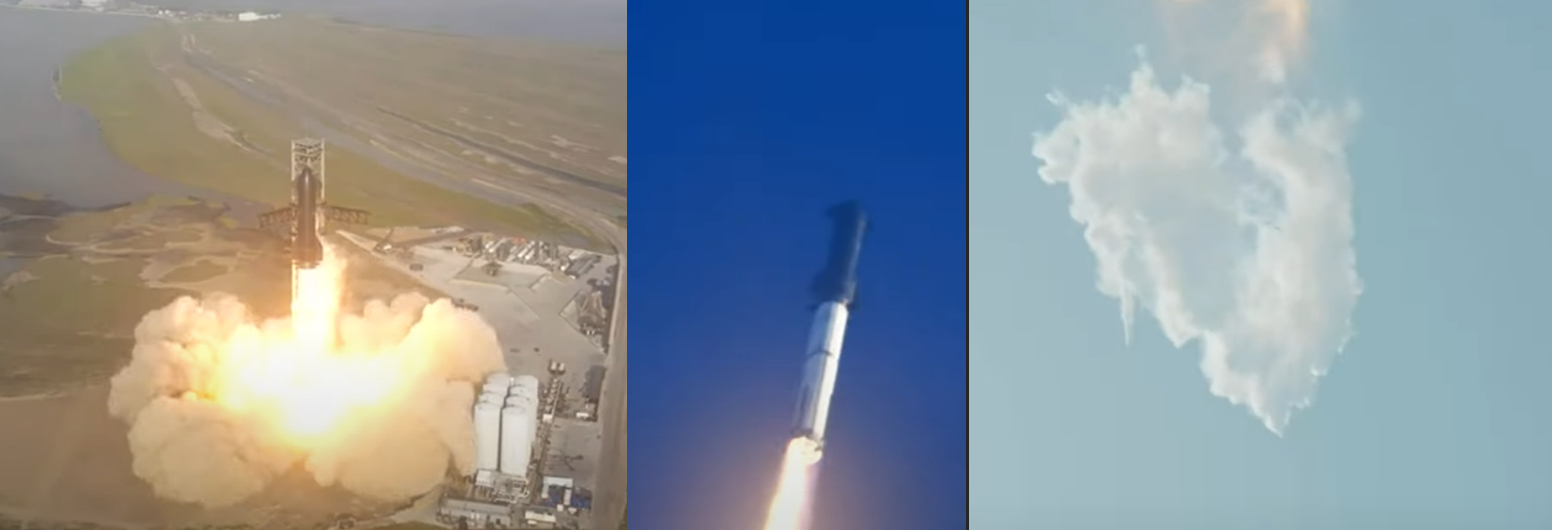
The maiden flight of Starship Superheavy ended with a bang.

STARBASE, TEXAS – Following the aborted launch of the Starship Super heavy vehicle, which you can read about here, the teams at Starbase worked hard to meet the next attempted launch date, which just so happens to be 4/20. Nice. Thursday came, and after a brief hold at t-40 seconds, Starship AND Superheavy, for the first time ever, roared to life and began it’s ascent into space.

Troubles
The liftoff was not without pain, however, as it was almost immediately clear that three engines failed to light. Regardless, the booster demonstrated excellent engine-out capability (or, a rocket’s ability to continue after an engine fails), and continued the ascent. Shortly after, the booster lost another three engines, but seemed to be able to relight one of them, according to the engine-out graphic. The rocket appeared to have cleared Max-Q (I say appeared, as the loss of 5 engines may have prevented the rocket from reaching the speed required).

Boom.
The flight came to a swift end shortly after stage separation was attempted. Starship, to save fuel, has been designed to separate without the use of hydraulic pushers or RCS (or, reaction control system). The entire stack was supposed to begin a flip before main engine cutoff, allowing the two stages to separate “passively”. This however, did not occur. The stack began to spin, but it was not able to separate. This could have happened for many different reasons, which we will surely hear about as SpaceX begins crunching the data, but regardless, a giant tumbling skyscraper with volatile fuel inside it is quite the safety concern, and the team activated the FTS (flight termination system).

Was this a failure?
From the outset, SpaceX were not anticipating much. Merely clearing the launch tower would have been considered an achievement, and would have given the SpaceX data crunchers enough data to crunch on, but this stack accomplished so much more. Sure, it was not without it’s troubles, but despite those problems the booster carried on and did it’s job (mostly). SpaceX themselves consider this a success, and will no doubt be hard at work modifying the next stack to fly.
Be on the lookout for a new podcast episode regarding this historic flight, and stay tuned for more information regarding the Starship development program. It’s sure to be interesting.

Leave a Reply