
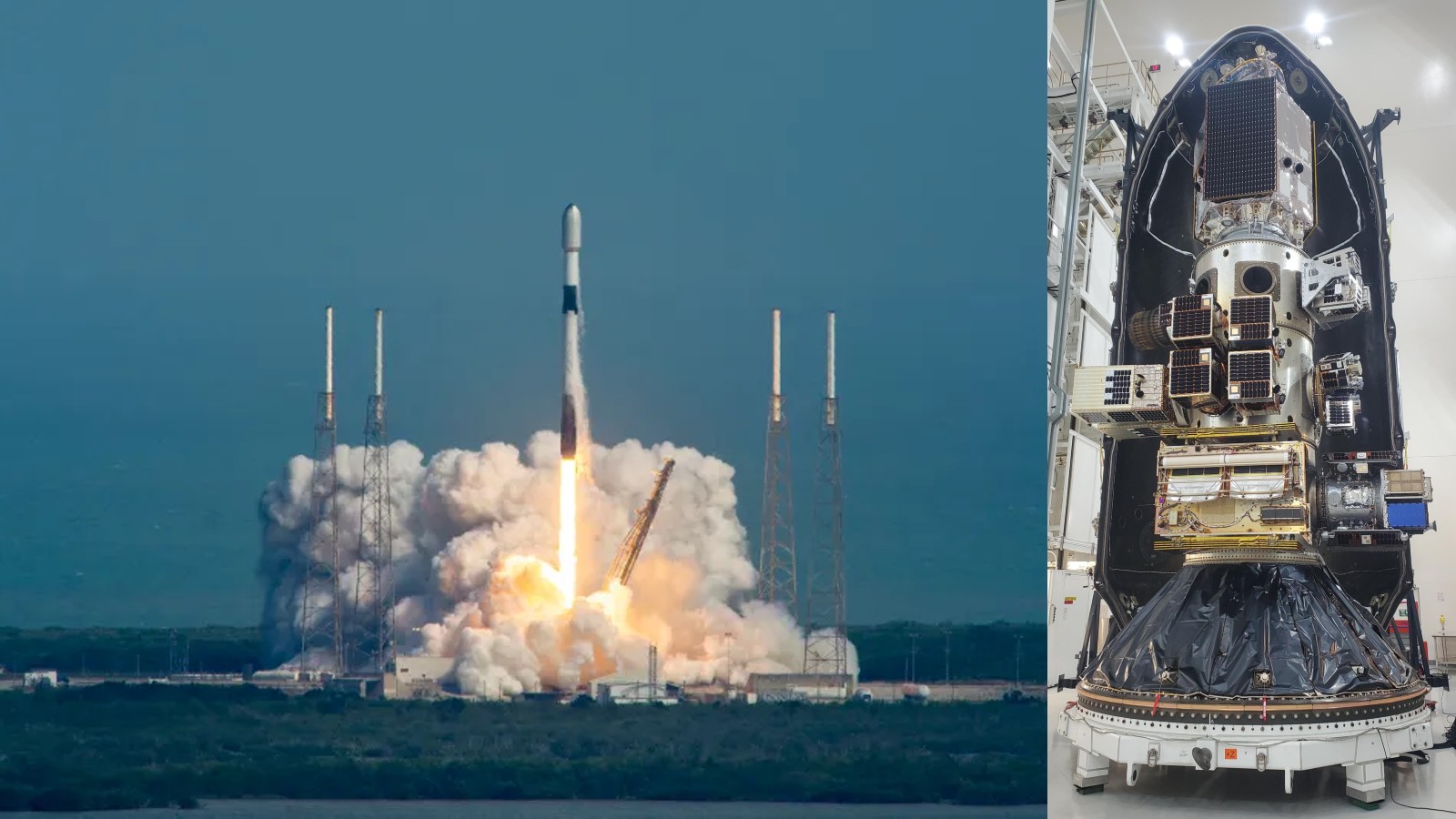
The first Transporter launch from the west coast, the first at night and the first launch of a modified MVac engine nozzle!

The Transporter missions have a rich history of providing beautiful RTLS (Return To Launch Site) landings as well as lofting ridiculous numbers of individual payloads to space for smaller satellite customers. Famous for the infinite “Super Dove deployment confirmed” messages over the radio and the seemingly endless satellite deployment sequence; Transporter-7 will not let us down with over 50 payloads being sent up on this mission.

Vandenberg, CA – SpaceX scrubbed a scheduled launch of the Transporter-7 rideshare mission from Space Launch Complex 4E at Vandenberg Space Force Base due to weather constraints at around T-28 seconds before liftoff. SpaceX made little comment on the scrub, simply stating that “unfavourable weather conditions” caused the delay.
This isn’t the first time that the mission has been called off though, the original launch date was postponed in order to allow for extra pre-launch checkouts and to allow weather conditions to improve. Clearly, they did not improve enough.
The launch vehicle’s booster will return to SpaceX’s LZ-4 adjacent to the launch pad approximately seven and a half minutes after launch. The payload fairing will be recovered from the ocean downrange by ship NRC Quest. This will be the first Transporter mission to launch from Vandenberg, as well as the first Transporter mission to launch at night.
Falcon 9 booster B1063 is making its tenth flight for SpaceX, becoming the eighth booster to surpass SpaceX’s original reuse goal of 10 reflights per booster. It previously launched Sentinel-6 Michael Freilich, DART, and seven Starlink missions.
The second stage will perform five burns throughout this mission. The first two will bring the vehicle to a nearly circular orbit around 500 km high to deploy most of the payloads about an hour after launch. Two more burns will raise the orbit to around 680 km circular for the deployment of IMECE, two and a half hours after liftoff. One final burn will send the second stage back into Earth’s atmosphere and conclude the mission.
New MVac, Who Dis?
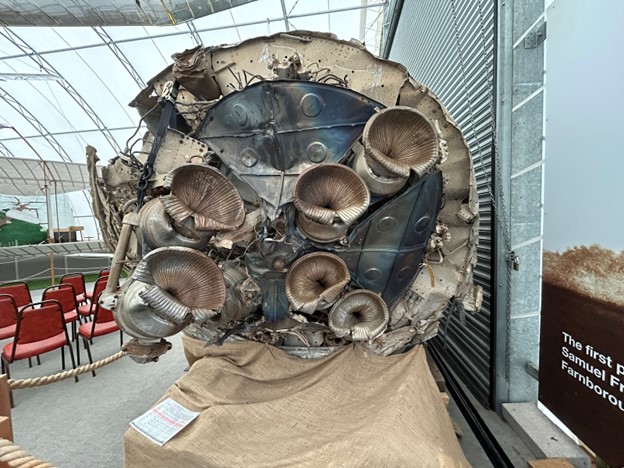
You read that right, SpaceX has made a change to Falcon! The Falcon rocket had undergone a design freeze to meet safety standards for crewed launches. However, SpaceX engineers have continued to work on improving the rocket’s design for future missions. One of the latest modifications making its debut on this launch is the testing of a modified MVac nozzle extension. This nozzle extension has been optimized for cost and manufacturability, which means it can be produced more efficiently and at a lower cost compared to the previous design. While this modification may result in a slight reduction in efficiency, it will still perform well enough for missions where the full performance of the Falcon 9 rocket is not required.
It’s important to note that for missions where more performance is needed, the former nozzle extension will be used. This nozzle extension is reserved only for missions where extra performance is not needed.
Where is it going?

Well, we don’t actually know what specific orbit SpaceX is targeting. From the ground track, SpaceX seems to be targeting some sort of circular sun-synchronous orbit at an altitude of around 500km. No official word has come from SpaceX as to what specific orbit is being targeted, but we can make a fairly accurate guess.
The high inclination (97.4°) means that the satellites will always revisit the same place at the same time every single day, which makes it ideal for Earth observation or gathering data from the same parts of the world every day. Coincidentally, many satellites on board Transporter-7 will be used for these purposes, and most CubeSats or SmallSats are used for this purpose too, which is why Transporter missions typically target high-inclination orbits.
What is heading up?

Transporter missions always seem cramped, and that’s because they are! On board, the rocket is a whole host of smallsats, cubesats and even a larger satellite named IMECE. More about that later. If I covered every single satellite in detail this article would be far too long, so here is the rundown of the interesting stuff:

The Vigoride OTV offers a payload capacity of 750 kg, as well as 2 km/s of Delta-V. This change in velocity can be applied to increasing orbital altitude up to 2,000 km. Another possibility is to modify orbital inclination up to 7°. The satellites travelling on this space tug have access to electrical power and communications. For its propulsion, Vigoride features a microwave electrothermal thruster, which uses water as a propellant. Pretty cool, huh?
Image Caption: A render of Momentus Vigoride in space (Credit: Momentus)

IMECE is Turkey’s first sub-meter resolution Earth observation satellite, featuring 0.99 m panchromatic and 5 m multispectral capabilities. Designed by TÜB?TAK Space Technologies Research Institute, it is one of several Turkish satellites on board.
Image Caption: IMECE being prepared at the TÜB?TAK Space Technologies Research Institute (Credit: TÜB?TAK)

Alba Orbital is a start-up company based in Scotland, that has rapidly emerged as a key player in the rapidly growing field of satellite manufacturing, design, and deployment. The company specializes in developing small satellites known as PocketQubes, which are smaller than traditional satellites, making them easier to launch and deploy.
As a launch broker, the company has already flown on vehicles like the Atlas V, the Electron, and the Falcon 9, which are some of the most popular launch vehicles in the world. They work with various launch providers to deliver their satellites into orbit, including the likes of SpaceX and Rocket Lab.
One of the unique challenges of working with PocketQubes is that they are very small, which means that they need to be arranged in clusters, so they travel to space in groups. This is where Alba Orbital’s expertise in clustering PocketQubes comes into play. By clustering these small satellites, they are able to deliver more functionality and coverage than a single satellite could.
Albapods are the PocketQube dispensers designed by this firm, allowing them to deploy up to 96P of spacecraft. These can be composed of tiny satellites of 1P, 1.5P, 2P, or 3P, which means a full deployment could very well place into orbit a whole constellation at once.
Hey, I’m Divaze (Div-ahh-zay). I’m a writer for Max-Q News by day, and a qualified SCUBA Diver by night. I love feeling weightless, and exploring other-worldly environments, which is why I am interested in both diving and space!
Leave a Reply