
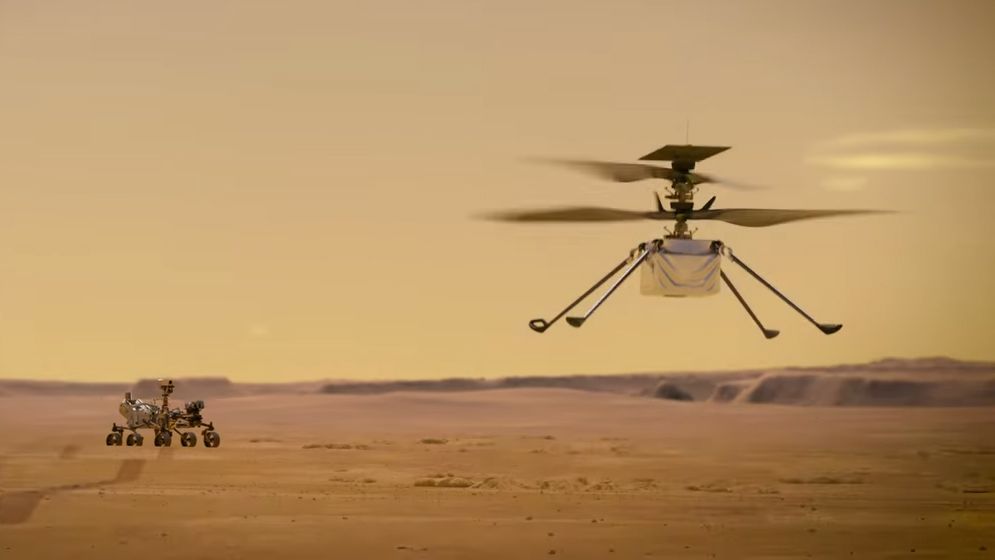

On April 13, NASA’s Ingenuity Mars helicopter reached a milestone not even its designers had anticipated. The rotorcraft completed its 50th flight across the Martian landscape. To put that into perspective, Ingenuity was expected to last a maximum of five flights, and it wasn’t known if the helicopter was going to even successfully lift off the ground on the first flight. Now, “Ginny” has pushed past its limits even further:
Flying on Mars
Ingenuity’s existence first hit the designer’s notepad in August 2013 at NASA’s Jet Propulsion Laboratory (JPL) as the aptly-named Mars Helicopter. The idea almost immediately hit its first and most significant obstacle: generating lift. Mars has less than 1% of the atmospheric density that Earth has. As put by Mimi Aung, the then project manager for Mars Helicopter, “The altitude record for a helicopter flying here on Earth is about 40,000 feet. The atmosphere of Mars is only one percent that of Earth, so when our helicopter is on the Martian surface, it’s already at the Earth equivalent of 100,000 feet up.”

Credit: NASA/JPL
In order to achieve lift in such thin atmosphere, everything about the helicopter had to be tailored to lightweight and rotor performance. As such, the final design sports a total mass of 1.8 kilograms (4 pounds), a single solar panel for electricity generation, a suite of cameras and sensors for data and navigation, and two counter-rotating sets of carbon fiber rotor blades that spin up to 2700 rpm.
Ingenuity was announced in 2018 to be joining the then Mars 2020 Rover, which would then later be named “Perseverance”. In the announcement, it was advertised as both a technology demonstrator for off-world aerial vehicles and also a companion for Perseverance on its mission to search for evidence of microbial life on the Red Planet. The helicopter would use its cameras to scout ahead of the rover and take images of points of interest from a bird’s eye view.
A “Wright Brothers Moment”

Credit: NASA/Joel Kowsky
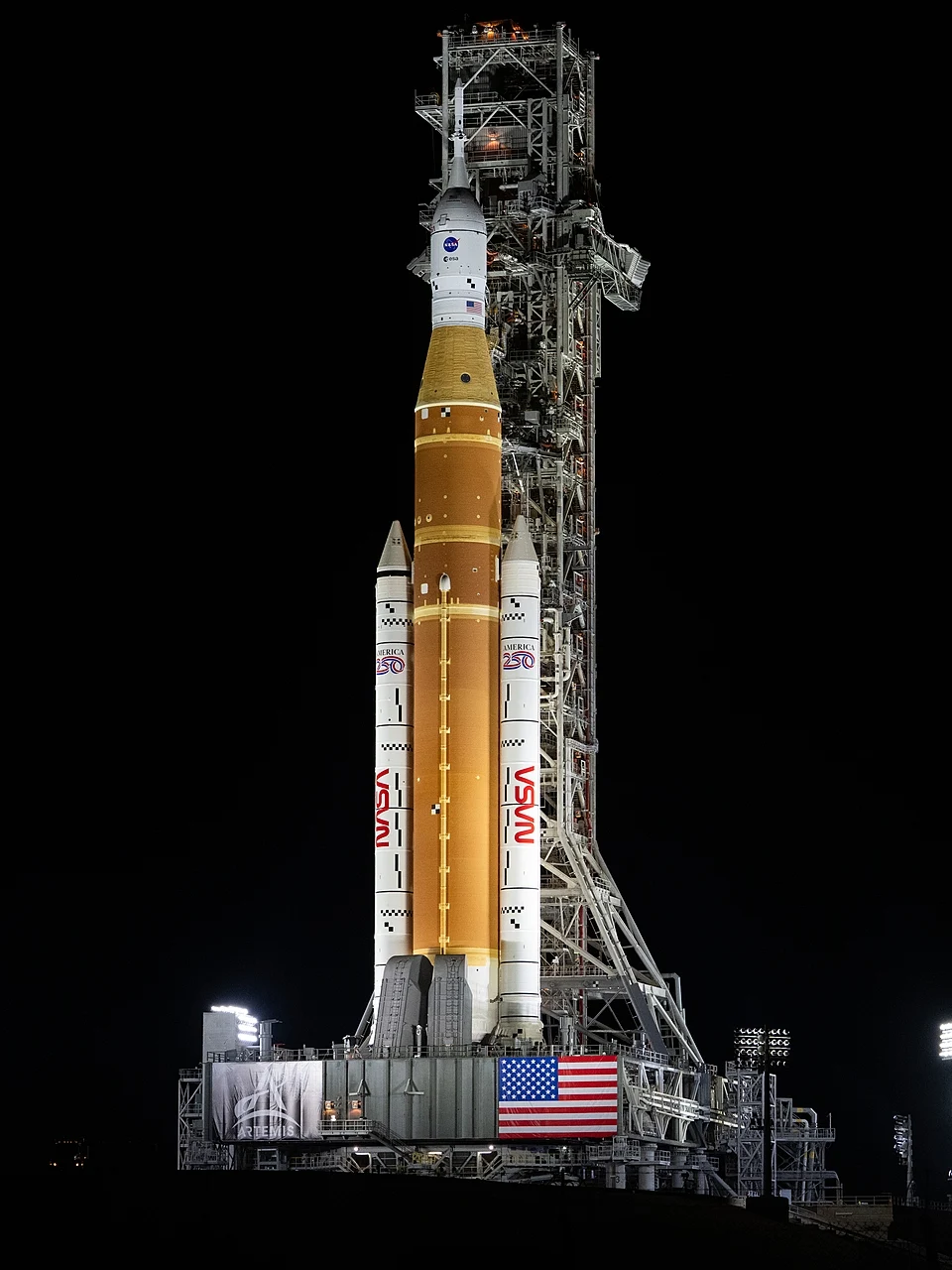
Perseverance and Ingenuity began their journey on July 30, 2020 when their ULA Atlas V rocket roared off the pad at SLC-41. Following a seven month cruise, the duo landed in Jezero Crater on February 18, 2021. After a month spent prepping the rover for scientific operation, Ingenuity was given the spotlight on April 3, 2021.

Credit: NASA/JPL
Ingenuity was deployed in early April, and it began what was only planned to be a 30 day test campaign lasting 5 total flights. On April 8, its rotors spun up for the first time. Following another spin-up test to flight rate, Ingenuity had its “Wright Brothers Moment”. On April 19th, Ginny spun up its rotors and lifted 3 meters off of the surface of Mars, and became the first airborne powered-flight vehicle to fly on another planet. It hovered for 40 seconds, took a few pictures, and softly touched back down on the Martian soil. What started out as a dream in Pasadena in 2013 became an exciting step forward on the plains of Jezero.


Credit: NASA/JPL
The following four flights built upon Ingenuity’s toolbelt of flight. It learned to move across the surface, go higher, and go faster. After its fifth flight, Ginny successfully demonstrated and exceeded all aspects that JPL wanted to test for future flying missions to Mars, Titan, and other worlds.
And then Ginny flew again.
And then again.
And again.
And again.
You get the idea.
Flying Forever
Ingenuity has now transitioned from a tech demo into a full fledged operational companion to Perseverance. It now flies ahead of the rover and scouts out interesting regions with its cameras for the teams to review before sending the rover for further science. As such, NASA has officially extended Ingenuity’s mission indefinitely. Two years later, and after 50 flights, Ingenuity is still going as strong as ever.

Credit: NASA/JPL
The team at JPL plans to continue flying Ingenuity for as long as the helicopter itself will allow. NASA’s long tradition of underpromising and overdelivering likely means we’ll get at least 50 more from Ginny. Here’s to the little helicopter that could!


Leave a Reply