
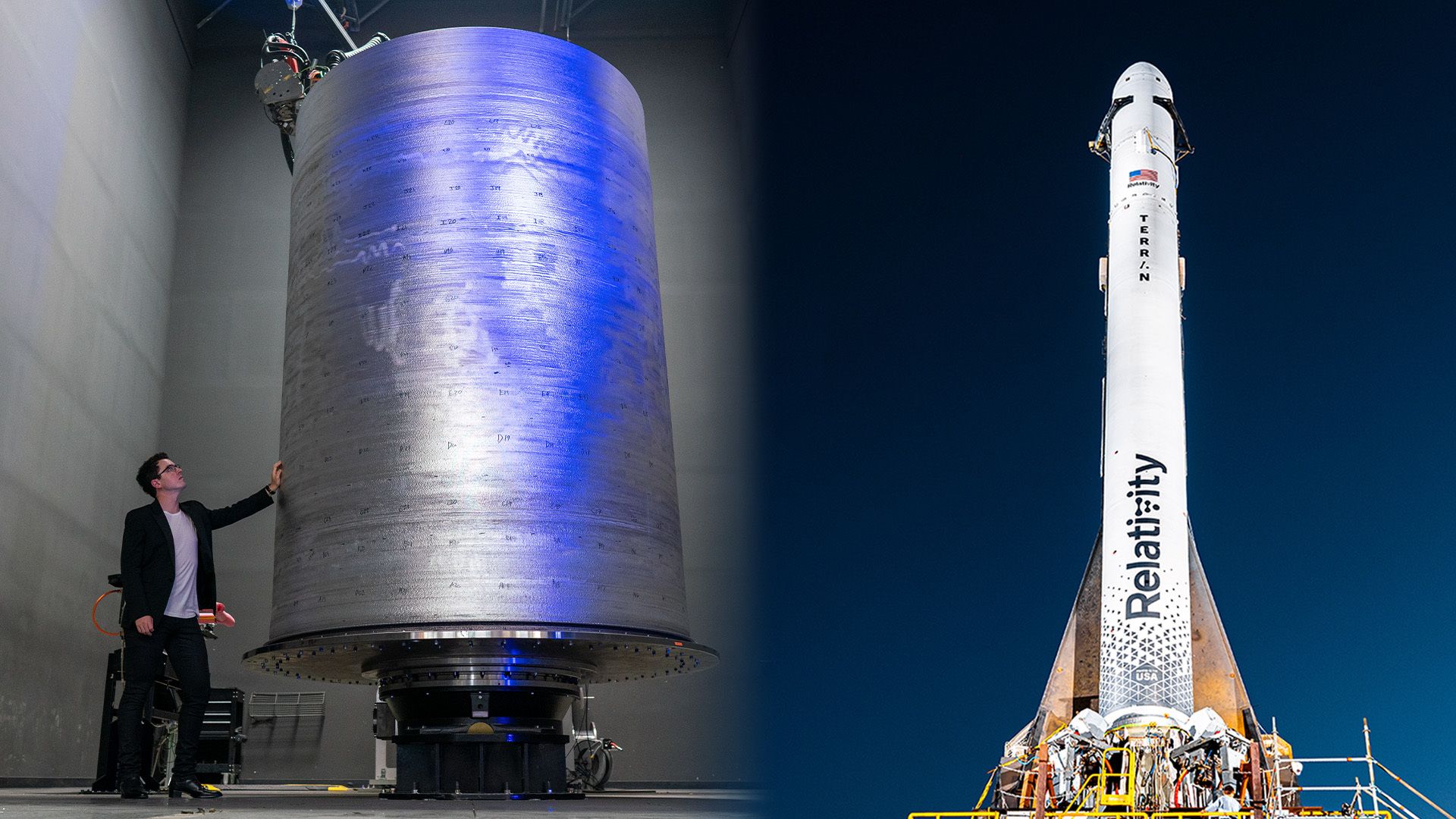

On March 22, Relativity Space made success with their debut launch of Terran 1, a nearly completely 3D-printed rocket powered by nine Aeon 1 engines using liquified natural gas (LNG) and liquid oxygen (LOX).

The main goal of this launch was not to launch a payload; in fact, this rocket did not even have a payload fairing, instead sporting a short nosecone on top of the second stage. The main objective for this launch was to successfully pass the period of maximum aerodynamic pressure, or “Max-Q”. This phase occurs on ascent shortly following when the vehicle becomes supersonic. In this region, the forces imparted on the rocket by the atmosphere are at their greatest, putting the structural strength of the vehicle to the test. If a vehicle passes through unscathed, then its structural integrity will hold for all other aspects of flight.
As Relativity manufactures their rockets by mostly 3D-printed components, passing through Max-Q is a critical milestone in the viability of their manufacturing methods. Fortunately for Relativity, Terran 1 passed the Max-Q test with flying colors. The rocket flew all the way through the burn of the first stage, and successfully separated the second stage. Unfortunately, the second stage failed to light properly and the mission was declared terminated soon after. However, as Relativity expressed in a recap Twitter post, the main goals of Terran 1’s first flight were achieved:
That was where Relativity stood, with a successful first mission and eyes toward a second flight for Terran 1 in the summer. That was, until today.
Flight Update from Relativity
At 10:02 AM Eastern, Relativity’s twitter began posting a thread recapping their findings from the post-flight investigation and data review:
In it, they recap the many achievements Terran 1 made. These include the title of the first 3-D printed rocket to fly, and the first methalox rocket from the Western Hemisphere to reach space. Terran 1 also successfully proved the structural viability of 3D-printed rockets, having surpassed Max-Q.
Most importantly, Relativity also released preliminary findings in the second stage’s failure to light, stating that the engine main valves opened “slower than expected”, which caused timing issues in the overall ignition sequence. This led to a vapor bubble forming in the oxygen pump inlet, which impacted the timing of the gas generator. The gas generator subsequently failed to light, causing the engine to “[fail] to reach full power”. Stage 2 continued to coast up to an apogee of 134 kilometers before falling back to Earth.
Terran 1 Out, Terran R In

Relativity concluded their Terran 1 report with an unexpected statement. Instead of Terran 1 returning to flight in the Summer as previously understood, Relativity Space is now focusing all of its efforts on developing Terran R, their next generation vehicle.
Relativity followed up this announcement with a general update announcement on Terran R. Included are updated renders and specifications for Terran R’s performance:
Terran R will aim to be a methalox version of Falcon 9, competing directly with SpaceX, ULA, and Blue Origin. It will be powered by thirteen Aeon R engines, each 3D-printed and producing a total of over 3.3 million pounds of thrust at liftoff. It will lift more payload to low Earth orbit while landing downrange just like SpaceX’s workhorse rocket.

There are notable differences between this current version of Terran R and the one previously presented in 2021:
- Terran R will be powered by thirteen engines instead of seven.
- The tank walls of Terran R will (at least initially) be constructed with aluminum, while the rest of the rocket will still be 3D-printed. The original Terran R announcement was entirely printed.
- The second stage of Terran R is now expendable. Originally, the second stage looked much more akin to starship, with fins near the aft of the stage and the intention of being reusable.
Tim Ellis, CEO of Relativity Space, explained in an interview with Ars that the move from full reusability to optimized first stage reusability was an economic one. Terran R reportedly has “considerable demand” and so the move to accelerate Terran R after Terran 1 proved what it needed to was a natural progression. “…since we need to get into market, and get to a higher ramp rate as quickly as possible, it just made sense to focus company resources on [first stage reusability]. It’s a much more pragmatic initial solution,” said Ellis.

Terran R is currently slated for launch in 2026. In order to make its own name in the launch business, Relativity will likely need to hit that deadline -or at least be very close- with a good rocket. SpaceX already has a dominant grip on the launch market, planning to average “400 tons of useful mass to orbit per quarter” this year, per an Elon Musk tweet. If Relativity wants to get a slice of the pie, Terran R will be their ticket.

Leave a Reply