
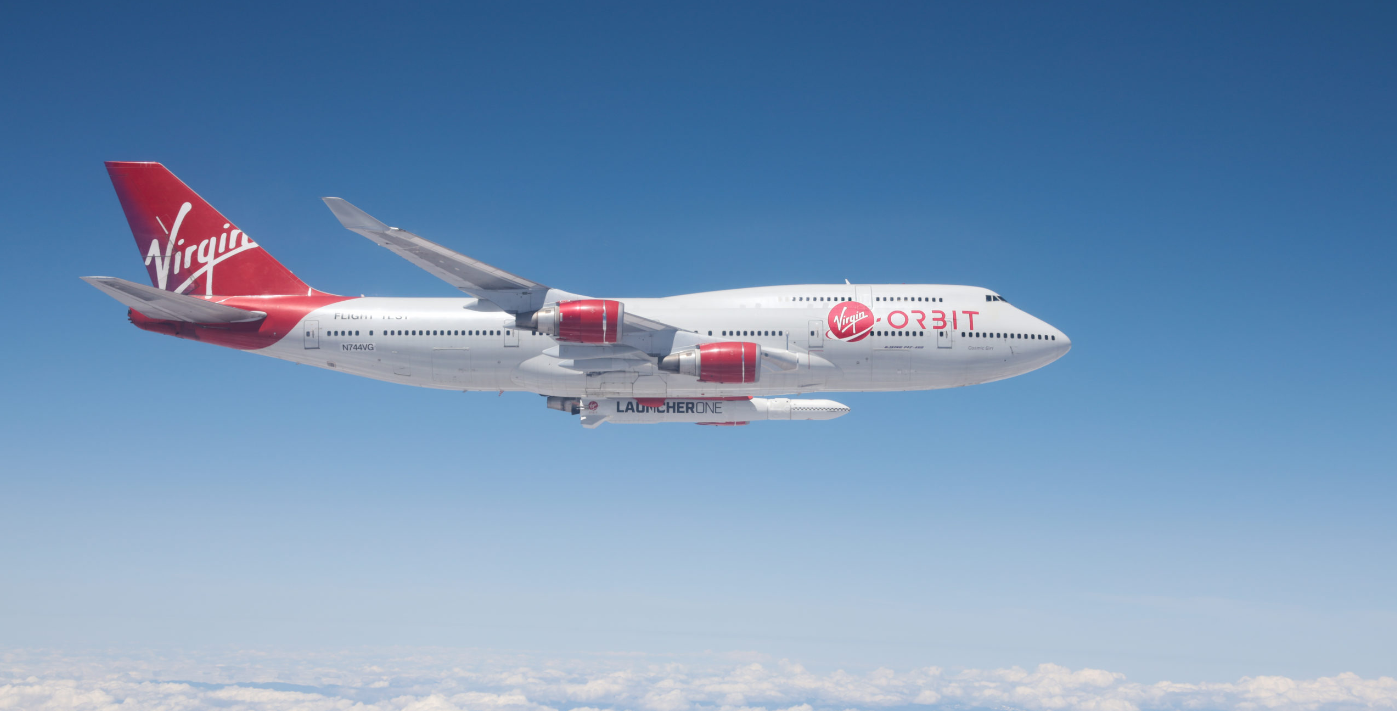

This past week saw failures of 2 launch systems from Virgin Orbit and ABL as each company attempted to set firsts in the orbital launch industry. For Virgin Orbit, their Launcher One rocket dropped from the wing of a modified 747 was supposed to be the first successful orbital launch from the UK. For ABL, their RS1 rocket was flying for the first time, and was aiming to be one of the few new rockets to reach orbit on the initial attempt.

Virgin Orbit
Cosmic Girl, Virgin Orbit’s modified 747 aircraft, deployed (dropped) the Launcher One rocket just after 11:00pm UK time on January 9th, with the rocket’s first stage Newton 3 engine igniting shortly after. Through this launch, Virgin Orbit was aiming to be the first to launch a rocket into orbit from the UK. Britain has launched to orbit in the past using their Black Arrow rocket, but that vehicle was operated and flown from Australia, not the UK.
Unfortunately, the second stage engine of Launcher One failed partway into its burn. The exact cause of the failure is unknown at this time. Virgin Orbit released the following statement describing the failed launch shortly after they confirmed the loss of the vehicle:
The rocket then ignited its engines, quickly going hypersonic and successfully reaching space. The flight then continued through successful stage separation and ignition of the second stage. However, at some point during the firing of the rocket’s second stage engine and with the rocket traveling at a speed of more than 11,000 miles per hour, the system experienced an anomaly, ending the mission prematurely.
For Virgin Orbit, this failure follows a streak of 4 successful missions for Launcher One, but comes at a time when the company is losing cash quickly. The company has struggled to increase cadence over hte past year, achieving only 2 launches in 2022 after initially predicting 4-6 missions. Based on the amount of cash the company has on hand, it is unlikely to survive past summer unless they are able to round up new funds and continue launching successfully.
ABL

On January 10th, just over 24 hours after Launcher One failed in flight, ABL launched their RS1 rocket for the first time from Kodiak, Alaska. This was their 5th attempt at launching since the middle of November, 2022, following a series of issues related to the vehicle and weather that had caused four previous scrubs.
According to ABL, shortly after the rocket lifted off, it experienced an anomaly that caused all 9 of its first stage E2 engines to shut down. The rocket then fell back towards earth and struck the launch pad, causing damage to the area. ABL has stated that no one was injured, and that all fires were put out shortly after the explosion.
While this is a setback for ABL, it was only their first launch, unlike Virgin Orbit. ABL is already testing their second RS1 for flight in Mojave, California. The company has many launch contracts and a good amount of funding and support from the likes of Lockheed Martin, Project Kuiper, and others. While not the outcome the company was looking for, ABL still has a bright future ahead as they look to rebound in the coming year with flight 2 of their RS1 rocket.
Leave a Reply