
Transporter 6 mission carries over 100 payloads into orbit


Cape Canaveral, Florida – A Falcon 9 rocket carrying 114 payloads destined for sun-synchronous orbit lifted off from SpaceX’s SLC-40 launch site in Florida on January 3rd at 9:56am ET, setting the stage for what may be the company’s busiest year yet. The mission was the 6th dedicated rideshare SpaceX has launched in less than 2 years on their Falcon 9 vehicle, and is a reliable and cost-effective way for customers to send their small satellites into orbit.
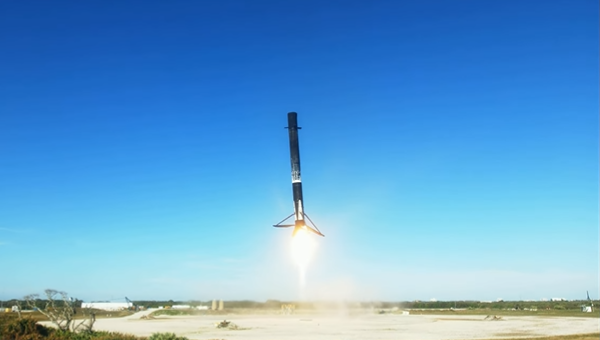
SpaceX continues to push their Falcon 9 boosters to new levels of reuse, with this mission seeing booster B1060 launch (and subsequently land at Landing Zone 1) for the 15th time. This booster is the second to reach this milestone; B1058 flew for the 15th time supporting the Starlink 4-37 mission in December 2022. It is likely that the company will continue to fly these boosters in the coming year as they look to increase launch cadence and advance Falcon reusability.
Onboard the Transporter 6 mission were 5 orbital transfer vehicles: Skykraft 1, Vigoride 5, Launcher Orbiter SN1, and two ION spacecraft tugs. Orbital transfer vehicles offer “last mile†transportation to satellites, taking them from the initial orbit provided by the launch vehicle into a more specific orbit that the satellite may need to operate efficiently. Skykraft 1, operated by Australian firm Skykraft, carried multiple Skykraft Block 2 satellites that will provide ATC communications in Australia. Vigoride 5 is the second Vigoride tug launched and operated by Momentus. The previous vehicle, Vigoride 3, suffered a malfunction with the deployments of its solar arrays, which limited power and communications with the spacecraft. The newly upgraded Vigoride 5 will aim to solve these issues, and carry multiple satellites including a hosted payload for the California Institute of Technology.

Launcher Orbiter SN1, built and operated by Launcher, is the first launch of the 400kg vehicle that will utilize a unique propellant system powered by ethane and nitrous oxide. While the transfer vehicle will initially be launched on rideshare missions like SpaceX’s Transporter 6, Launcher intends to also launch it as a third stage on their own Launcher Light rocket, which will fly for the first time no earlier than 2024. D-Orbit’s ION SCV-007 and ION SCV-008 space tugs carried numerous hosted and deployable payloads. These are the company’s 6th and 7th vehicles flying to orbit as rideshares on Falcon 9 rockets.
Other notable payloads launched onboard Transporter 6 included 36 Flock 4Y SuperDove imaging satellites from Planet Labs, 2 more Lynk Global satellites to expand direct-to-cell communications, the Electro-Optical/Infrared (EO/IR) Weather System (EWS) cubesat for the US Space System’s Command, as well as numerous other payloads from imaging satellites to IoT cubesats.
Transporter 6 was the first of 4 planned dedicated rideshare missions to sun-synchronous orbit in 2023 onboard Falcon 9. Transporter 7 is currently scheduled to fly no earlier than April 2023.

Leave a Reply